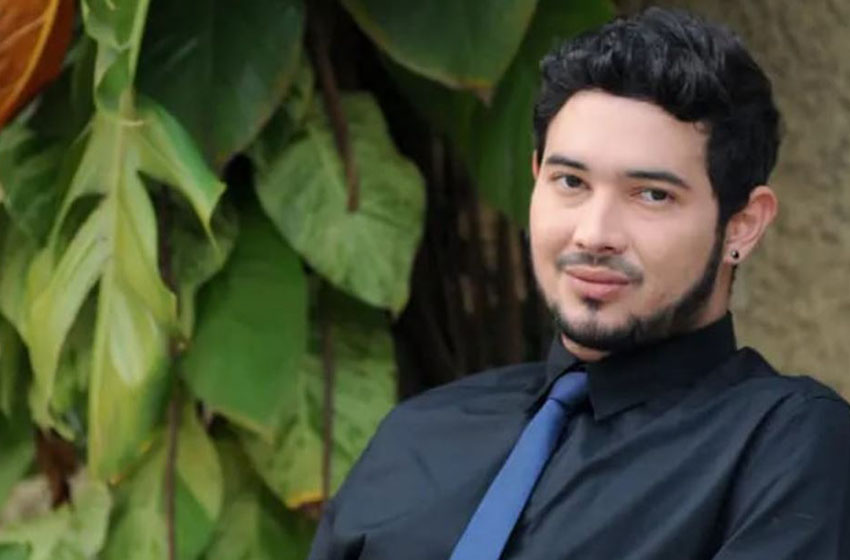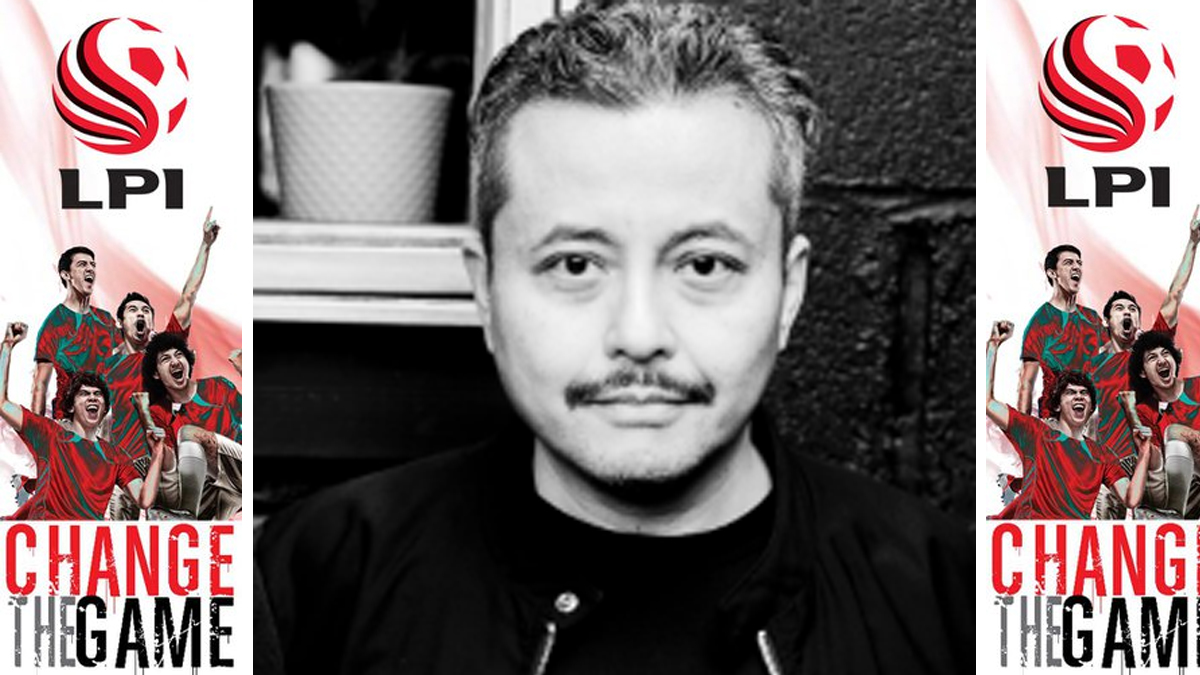



















Arya Abhiseka is a key figure behind the Liga Primer Indonesia (LPI), a breakaway league that once challenged the chaotic official PSSI-run competition. Here is an excerpt from an exclusive interview with him.
- Looking back now, what was the founding vision behind the Liga Primer Indonesia project?
The goal was to fix a version of Indonesian football that had been hollowed out by corruption, match-fixing, mismanagement, and years of underinvestment in talent development — all traceable back to a federation with no real direction. At the time, the federation chairman was running PSSI from a jail cell after a graft conviction. I also saw that football had become a political tool: with millions of fans, it doubled as a vote bank for political parties. On top of that, a football mafia was operating in the shadows — fixing transfers, matches, and referees. In Indonesia, a championship was something you could simply buy.
- What gave you the conviction that Indonesian football could actually be reformed through this project?
We had real backing from Medco’s Arifin Panigoro, an oil tycoon. I understood from day one that reforming football at this scale would take serious capital, so I also tried to bring in outside investors — including Peter Chernin, the American media executive. My pitch was that Indonesia’s enormous, organically-built fanbase was our biggest asset — it was what would eventually translate into strong TV ratings and make the investment worthwhile.
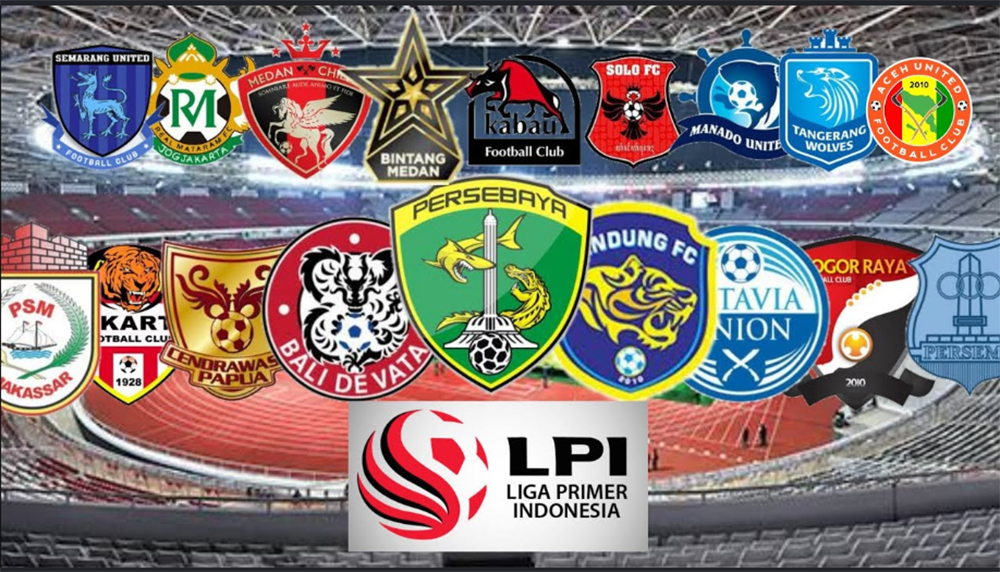
- What drove the decision to bring in so many coaches, referees, and players from Europe and South America?
It wasn’t only Europe — we also drew from Brazil and Argentina. Those were simply the natural benchmarks. We needed to raise the level of coaching, not just playing talent, since our domestic coaching standard was weak. Bringing in European referees was about establishing a clean, unbiased standard — new referees who were still outside the reach of the football mafia’s usual channels.
- In hindsight, what would you say was the project’s greatest strength — and its greatest weakness?
The strength was the ambition itself: we set out to shake the system, and we did. Building a breakaway league was never meant to be a permanent structure — it was designed to destabilize the status quo and force the question, “Can the football mafia actually be challenged?” It turned out they could — we ended up taking power within PSSI itself.
The weaknesses were harder to overcome. First, capital: Panigoro was carrying it largely alone once the Chernin partnership and other backers didn’t materialize — it was too much for one investor to sustain. Second, internal cohesion: there weren’t enough people in Indonesian football who combined a clean vision with real competence, so we ended up bringing in people who may have been compromised by the old regime, which undermined our unity from within. I eventually stepped down from my role due to personal reasons tied to outside pressure, but the biggest reason was that I lost trust in the solidity of our internal process. And the installation of Djohar Arifin as PSSI chairman — with LPI’s backing — turned out to be the biggest misstep; he had neither the charisma nor the competence for the job. But by that point, Arifin Panigoro himself had been shut out of the race by FIFA/Sepp Blatter.
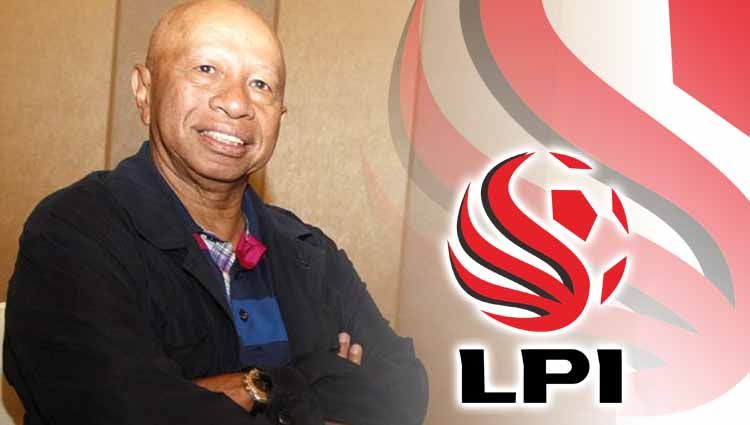
- Do you recall how our working relationship first began? What was your early impression of how we worked together?
I first came in contact with you through Paul Agostino, the Australian international striker, whose contact I obtained from Brendan Schwab, my connection through FIFPRO Asia. We first met in Zurich to sign several players and coaches. I remember signing the first contract at my hotel in Zurich. My first impression working together with you was that you had many connections. With so much I had to manage to develop the league — and all the other logistics — it was almost a one-man show for me. Having you meant I could trust that you’d help bring what I needed: quality coaches and players on a sensible budget.
Formula 1 Project Bali
- Where did the idea of building a Formula 1 circuit in Bali originally come from?
The idea came from me. At that time I felt Bali was the most beautiful tourist spot in Southeast Asia. Thailand had the highest visitor numbers, but Bali had class — bringing F1 to Bali was the perfect idea, and Bali had what it took.
- What made you believe Bali — and Uluwatu specifically — was the right site for it?
When you think of F1, you have to think of high-class tourism — upscale visitors. Uluwatu could deliver that. It has the classiest, most prestigious hotels and resorts.
- What was Suharto’s son meant to contribute to the project?
Part of the idea was that I had a connection who could bring in Tommy Soeharto, who was a racing fanatic and a racer himself. I was fully aware of the risk that connection carried, given his reputation. But if I needed local support, he was the perfect businessman for this project.
- When did you first sense the project wasn’t going to happen?
My connection advised that Tommy Soeharto and the Soeharto family wouldn’t spend their money on an extravagant project, given the risk of public backlash over the corruption Soeharto committed during his 32 years in power. So he backed down. I couldn’t convince other local investors to step in.
- Do you think, under different political conditions, it could have come together?
It can still happen now. Indonesia built the MotoGP circuit in Lombok — a great idea. But Bali would attract more.
Personal
- Across all the years we worked together, what stands out most to you about our collaboration?
I think you’re a genuine person with a similar idealism. You believe sports must be managed professionally — I think that was your attraction to the Indonesia project in the first place. That’s the main reason we connected so well.
- If you had to sum me up as a football manager in three words, what would they be?
Genuine, focused, and creative.
Closing
- If our years working together were a chapter in a book, what would you title it — and why?
“The Incomplete Revolution.” We set out to shake a system built on corruption and mismanagement, and we did — we rattled the mafia, took a breakaway league further than anyone expected, and eventually took power within PSSI itself. But it was never finished. We never got to youth development. We never had enough capital to see the vision through to the end. It’s the right title because it holds both stories — football and Bali — under one roof: real ambition, real progress, but always stopped short by the same missing piece.
- What do you think is the biggest lesson we both took away from the Indonesia project?
Changes are never easy. It requires the right vision and the right capital. We were able to execute the vision, though not all the way to the end — it was an incomplete revolution. We never got to youth development. We didn’t have enough capital. Panigoro should have brought more tycoons together to see the vision through from start to finish. I don’t know if it was ego, or that he simply couldn’t convince other billionaires to join forces with him. (*)