


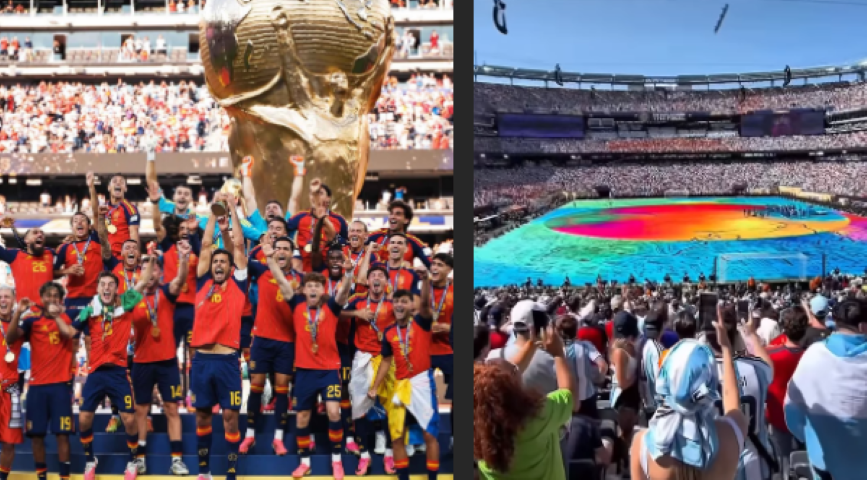


There is a place where a World Cup final belongs, and it is not a parking lot in New Jersey. It is the Azteca — that great concrete cathedral where the air runs thin and the history runs thick, where the ghosts of ’70 and ’86 still lean over the railings to watch. Given three nations to choose from, football chose the suburbs. They called it New York and then quietly conceded it was New Jersey; MetLife, a stadium built for a sport played with the hands. In that small dishonesty you could already hear the whole tournament humming its tune. The fanfare was not lost. It was relocated, then priced out, then forgotten.
Because this was never really a tournament. It was a transaction. FIFA arrived in America the way a courtier arrives at a new king’s table — bowing before it has been asked. One watched Gianni Infantino orbit the corridors of power and wondered who, exactly, was running whom: the president of world football reduced to something like a valet, holding the coat of Donald Trump and smiling for the cameras. Somewhere along the way the game stopped belonging to the people who love it and started belonging to the people who bill for it.
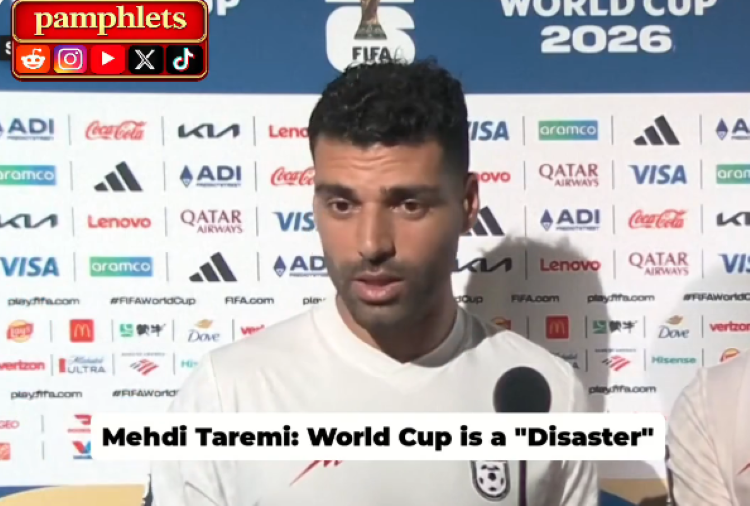
Ask Iran, who were treated less like a national team than like a problem to be processed — permitted, we are told, some two hours in the building after each final whistle before being ushered back into the night, as though their very presence were an inconvenience to the spectacle. Ask them about the goal that never was: the phantom Egyptian defender who materialized out of the officiating ether to strangle Taremi’s moment in its crib. There was a version of that match where Taremi is a hero and a nation dances in the streets. FIFA did not screen that version.

And then there was Argentina — poor, blessed, chaperoned Argentina, guided through the knockout rounds as though the script had been written in advance and they had been handed the pen. Cape Verde, Egypt, Switzerland: each a small clinic in how a whistle can be a weapon and a benediction at once. VAR, that great promised instrument of justice, arrived instead as an alibi — a technology summoned not to find the truth but to certify the convenient one, and to do it slowly, in high definition, so the entire watching world could study the fingerprints of the crime. By the final it had stopped being a rumor and become a law of physics. An average side — and let us be honest, they were an average side — walked into the biggest match on earth and registered not a single shot across ninety minutes, and still the machinery groaned in their favor. It was meant to be a coronation. It became a eulogy. Messi’s last act on the great stage, and the game conspired to end his legacy not in light but in a long, embarrassed silence.
The rest was set dressing for a country that never learned the sport and so tried, instead, to buy it and rename it. They gave us “hydration breaks,” those tender little pauses dressed up as mercy for the players and sold, in truth, to the advertisers — a commercial slipped in through the side door wearing a doctor’s coat. They gave us NFL stadiums with the wrong bones, the pitch squeezed into geometries the game was never meant to inhabit. They gave us the camera that could not resist a famous face, panning from the ball to find a celebrity in the good seats, as if the football were merely the excuse and the real event were being seen. And they gave us the bill — ticket prices like ransom notes, and not one gesture of protection for the faithful who crossed oceans and emptied savings to be there. From first whistle to last, it was about the money. It was the most chaotic World Cup we have ever endured.

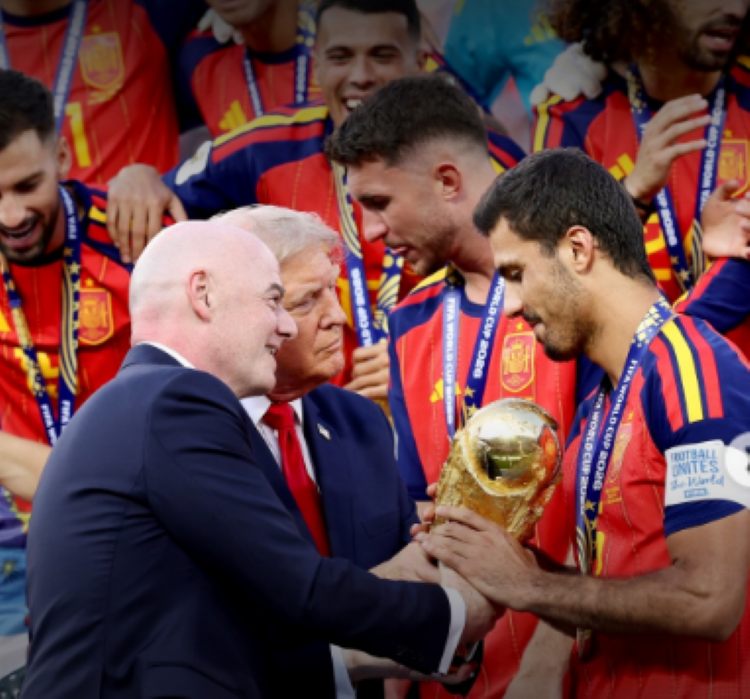
And yet. Here the cynic must lay down his knife, because some things even a rigged carnival cannot fake. Spain won, fair and square, and they were beautiful. They were, plainly, the best team in the world — one goal conceded across an entire tournament, a defense like a door pulled shut. In Rodri they have the finest midfielder alive, the metronome around whom the whole thing turns; in Yamal and Williams, two young wingers who play as though the pitch were a playground and fear had not yet been invented. Everyone has ideas about how football should be played. Spain are simply the best at making theirs real. This is not a champion. This is the first page of a dynasty.
And in the end — this is the part we do not say aloud — we do not care. Not really. Football is the opioid they hand us, and we roll up our sleeves gratefully. We will forget Iran, ushered out into the dark. We will forget the whistles that always seemed to blow one way. We will forget the greed and the coats and the cameras and the price of a seat. We will forgive it all, because forgiveness was never the point — the addiction was. And four years from now, when the lights come up somewhere new and the anthem swells and twenty-two men walk out onto the grass, we will be exactly where they know we will be: leaning toward the screen, hearts open, wallets ready, watching it all unfold again as if for the very first time.***